Shop orthodontic utility pliers in Canada: Weingart pliers, band seating and removing pliers, bracket and adhesive removing pliers, tip back pliers, crimping and contouring pliers.
Showing 1–9 of 19 results


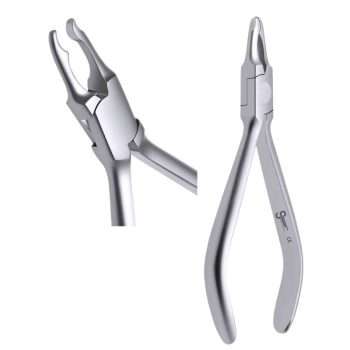
Utility pliers do the everyday jobs of orthodontic treatment: placing and removing archwires, seating and removing bands, removing brackets and cleaning up adhesive.
What is in the range
The range includes standard, slim and ultra slim Weingart pliers, straight How pliers, band seating, band crimping and crown and band contouring pliers, posterior band removers (standard, long and slim), bracket removing pliers (straight and angled), adhesive removing pliers, arch hook crimping pliers, tip back and NiTi tip back pliers, a bird beak plier with cutter and a force module separator.
How to choose
Weingart pliers are the general-purpose choice for archwire placement, and slimmer versions reach crowded and lingual areas. Band pliers seat, crimp and contour bands, and band removers lift them off at the end of treatment.
Choose bracket removing pliers by access: straight for anterior teeth and angled for posterior teeth. Use pliers only for their intended task, and do not use utility pliers to cut wire.
Care and sterilization
Clean instruments as soon as possible after use, before blood and debris dry on them. Use an ultrasonic cleaner or washer, rinse and dry, then pouch or cassette them for the autoclave. Inspect working ends for wear, bending or damage at each cycle, and replace instruments that no longer perform. Lubricate box joints before sterilization.
Related: Wire Forming Pliers, Cutters, Mathieu and Orthodontics.
Frequently asked questions
What are Weingart pliers used for?
They place and remove archwires and guide them into bracket slots. The curved, serrated tips hold the wire without slipping.
Which plier removes brackets?
Bracket removing pliers slide under the bracket base and peel it from the enamel. The angled version reaches posterior teeth.
What is a tip back plier for?
Tip back pliers bend the distal end of an archwire. The NiTi version is made for nickel-titanium wire.