

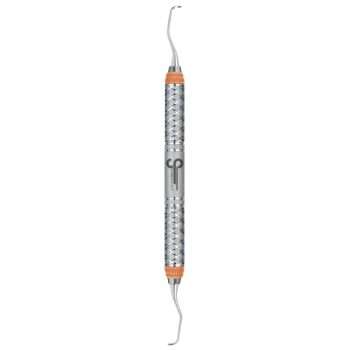
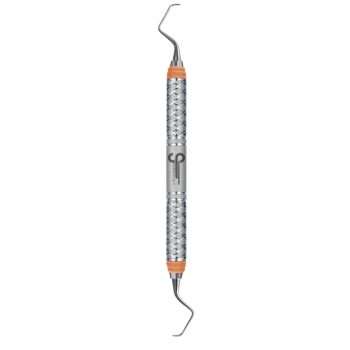
The band pusher and picker orthodontic instrument covers the two core hand tool tasks required at every molar band appointment: seating the band fully onto the tooth and removing or repositioning it for fit adjustment. Rather than carrying two separate single-ended tools, the clinician works through the entire band procedure with one double-ended instrument. Orthodontic molar bands are fitted across two appointments, try-in and sizing followed by cementation, and at each stage the ability to push the band into position and pick it back off the tooth is needed within the same working sequence.
The pusher end carries a rectangular, serrated tip set at an angle to the shank. The rectangular profile distributes seating force across the full width of the band rather than concentrating it on a single edge, reducing the risk of distorting the band or rocking it out of alignment during the seating stroke. The serrations grip the band surface so the tip does not slide off under pressure. The clinician places the tip against the occlusal edge of the band and applies firm, steady inward pressure, driving the band toward the gingival margin in small incremental strokes around the circumference of the tooth. After instrument pressure, the patient may also be asked to bite on a bite stick for final seating. Together, these steps bring the band to its correct gingival level without tilting or distortion.
The picker end uses a hooked or angled fine tip to engage the band at points where the pusher end cannot work. During the fitting appointment, the picker repositions a band that has tipped or canted before it is fully seated. It also picks up the band from the tooth surface when removal for adjustment is needed, engaging under the occlusal edge to lift the band clear without levering against the enamel surface or surrounding soft tissue. At the band removal appointment, whether during bracket debonding at the end of treatment or during a band replacement procedure, the picker tip slides under the gingival margin of the cemented band to break the cement seal before band-removing pliers complete the removal. This step reduces the force the pliers need to apply, lowering the risk of enamel damage during debanding.
The double-ended design means the clinician handles one instrument through both the seating and manipulation stages of the band appointment rather than alternating between two single-ended tools. The handle diameter and balance point support a stable modified pen grasp throughout. Medical-grade stainless steel, corrosion resistant, autoclavable. Cleans effectively in ultrasonic units prior to steam sterilization.




Reviews
There are no reviews yet.