
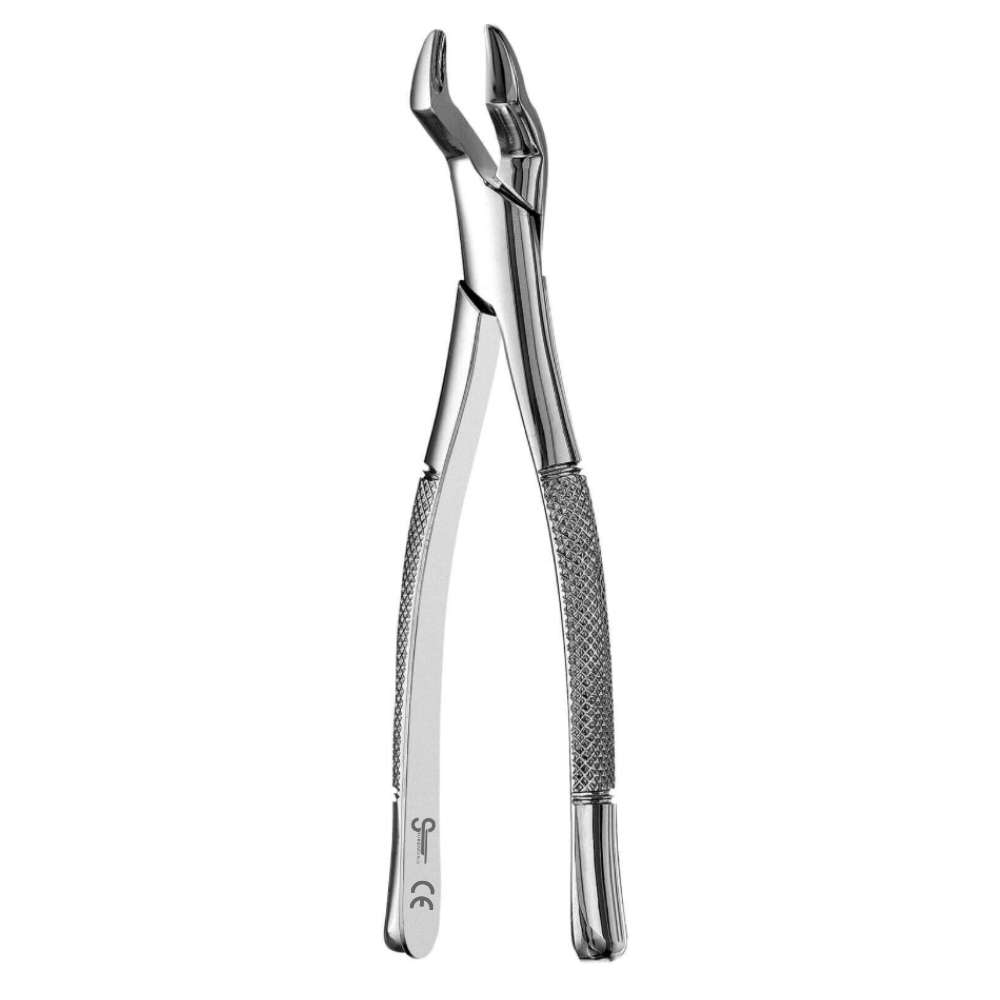
The SurgiWorld 10S Forceps are a purpose-built extraction instrument for removing maxillary first and second molars – teeth that present a unique challenge during extraction due to their three-root anatomy: a wider mesiobuccal root, a distobuccal root, and a single conical palatal root. The 10S beak design is engineered specifically around this anatomy.
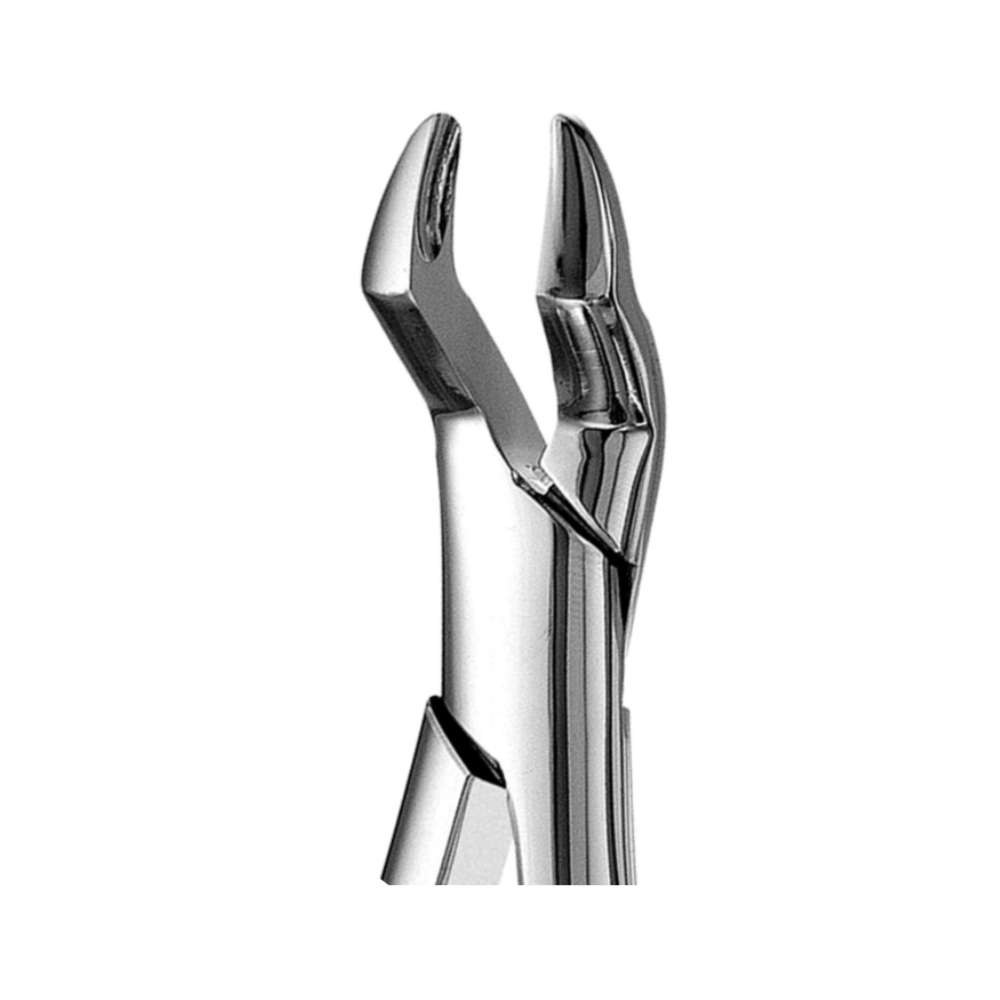
How the beak design works: The forceps feature two distinct beak profiles on opposing arms. The pointed beak is angled and tapered to seat firmly into the buccal furcation – the space between the mesiobuccal and distobuccal roots on the cheek side of the tooth. The rounded beak wraps around the palatal root on the tongue side, providing a stable cradle without slipping. Together, these two contact points give the operator a secure three-dimensional grip around the entire crown and root complex before luxation forces are applied.
The serrated beak surface increases friction between the instrument and the tooth surface, preventing slippage during the buccal and palatal luxation movements used to dilate the alveolar socket before delivery. This is particularly important with heavily restored molars where smooth enamel or porcelain crowns can reduce natural grip.
The universal (non-sided) design means one instrument covers both the upper right and upper left quadrants – the beak geometry is symmetric enough to function on either side of the arch, reducing the number of instruments needed on the tray and simplifying instrument management in busy practices.
The “S” designation in 10S refers to the serrated beak surface finish – distinguishing this from smooth-beak variants of the same forceps pattern. Serrated beaks are generally preferred for routine extractions as they reduce the chance of the instrument losing grip mid-procedure.
Manufactured from high-grade stainless steel, the 10S forceps are corrosion-resistant and fully compatible with standard autoclave sterilization. The handle offers a comfortable palm grip with sufficient mechanical advantage to deliver controlled extraction forces without excessive operator effort.
Suitable for: General dentists and oral surgeons performing routine and surgical extractions of maxillary first and second molars – including cases involving partial bone support, mild hypercementosis, or heavily restored crowns where grip security is a priority.



Reviews
There are no reviews yet.