
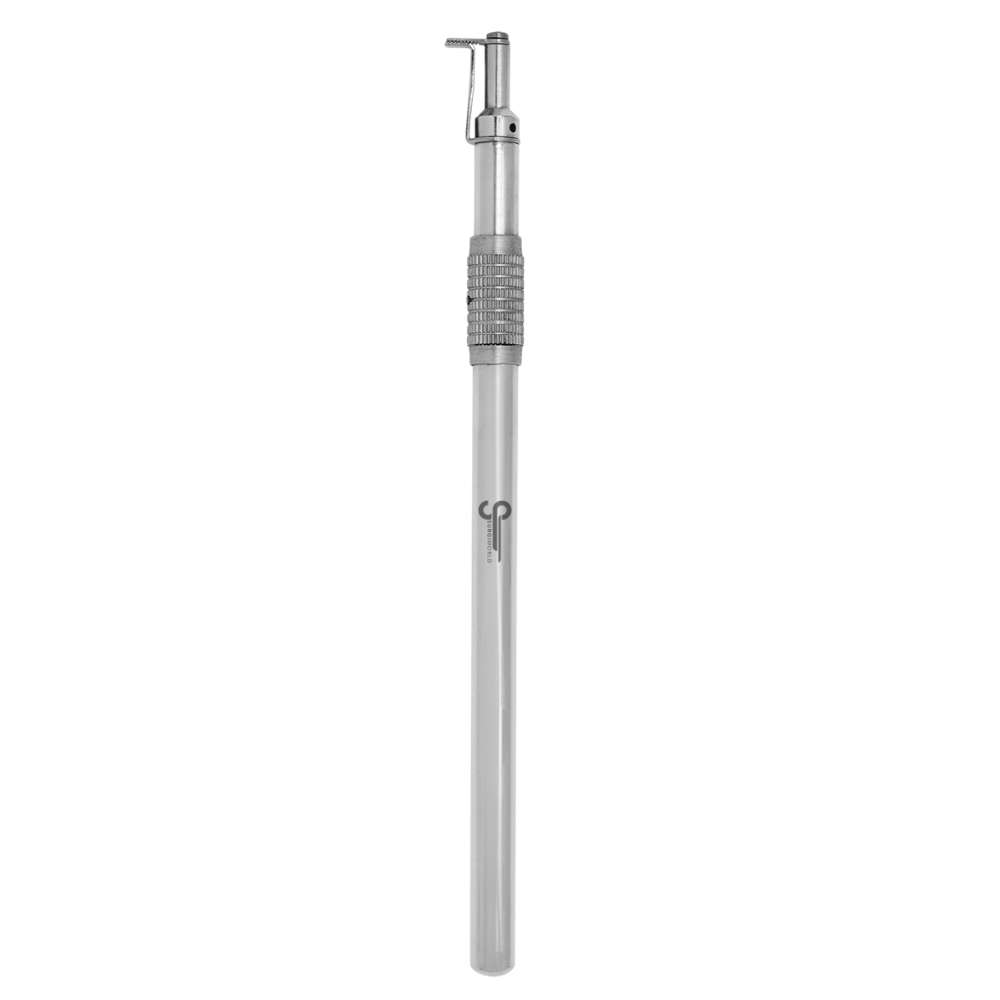
Bracket positioner is the primary hand tool used during the bonding stage of fixed appliance treatment. Accurate bracket placement is the foundation of the straight-wire technique: the built-in prescription of tip, torque, and in-out values in each bracket only expresses correctly when the bracket is bonded at the exact center of the clinical crown, known as the facial axis (FA) point. Any deviation from this position in the vertical, mesiodistal, or buccolingual plane introduces an error that persists for the remainder of treatment and requires additional archwire bending to compensate. The bracket positioner gives the clinician reliable control over all three of these placement variables through a single instrument.
The front tip is serrated and sized to grip the bracket body between the tie wings. The serrations prevent the bracket from rotating or slipping on the tip during intraoral transfer from the bonding pad to the tooth surface, which is the most common point of placement error. The slim tip profile fits between adjacent brackets and into posterior regions without contacting adjacent appliances or soft tissue, giving the clinician a clear line of sight to the FA point as the bracket is brought into contact with the adhesive. Once contact is made, the clinician holds the instrument steady while making fine positional adjustments, reading the bracket’s horizontal slot orientation and its vertical position relative to the cusp tip or incisal edge before the adhesive begins to tack.
The back end of the instrument provides a second working function. After the bracket is positioned correctly, the clinician rotates the instrument and uses the flat back end to press the bracket base firmly and evenly into the adhesive layer. This seats the bracket flush against the enamel and removes any air gap or rocking at the bracket base that would compromise bond strength. Applying seating pressure through the instrument rather than a finger keeps the bracket position stable and avoids the displacement that often occurs when a gloved fingertip contacts the adhesive around the bracket margins.
The reverse spring action of the body holds the tip closed on the bracket when at rest, so the clinician squeezes to release rather than to grip. This means the instrument maintains its hold on the bracket under relaxed hand pressure, and the bracket only releases when the clinician intentionally opens the tip. This reduces the chance of an accidental drop, particularly important during posterior bracket placement where the retrieval of a dropped bracket from the oral cavity is a clinical interruption. Medical-grade stainless steel throughout, corrosion resistant, autoclavable at standard steam sterilization parameters, and compatible with ultrasonic cleaning prior to sterilization.





Reviews
There are no reviews yet.