
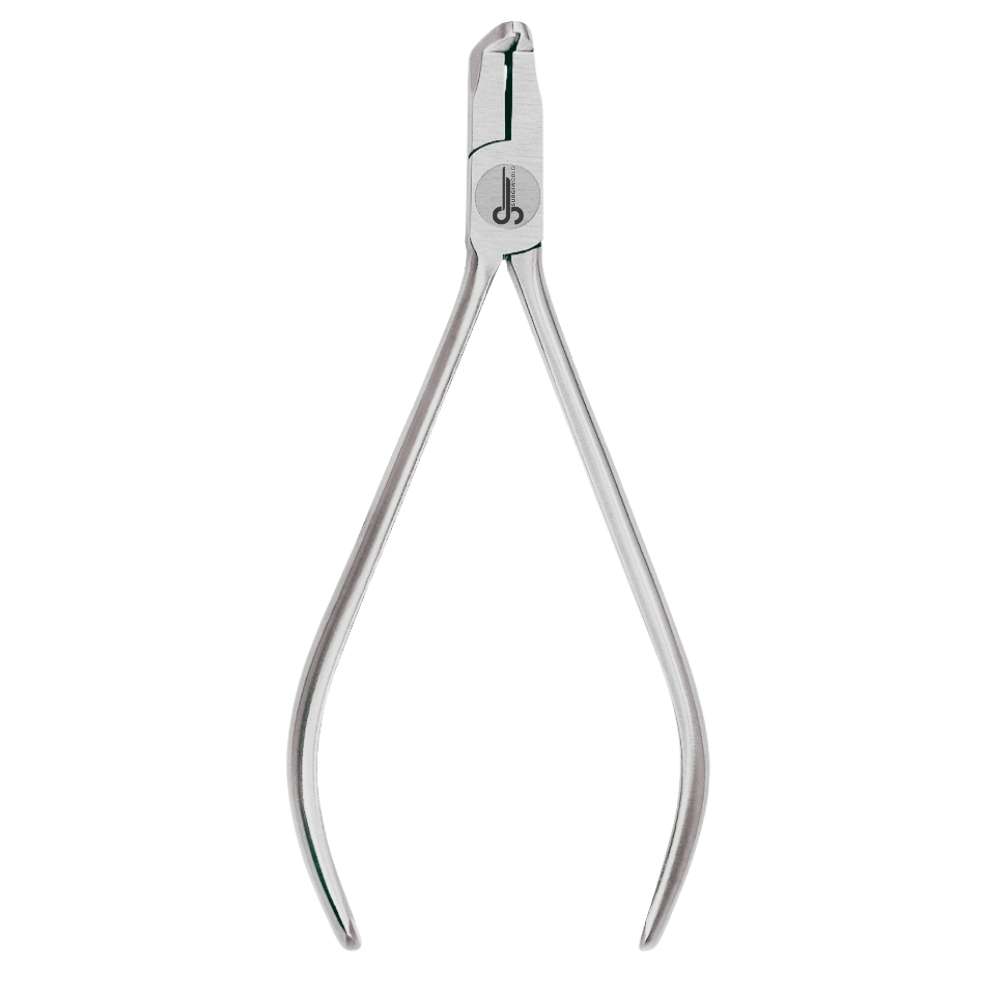
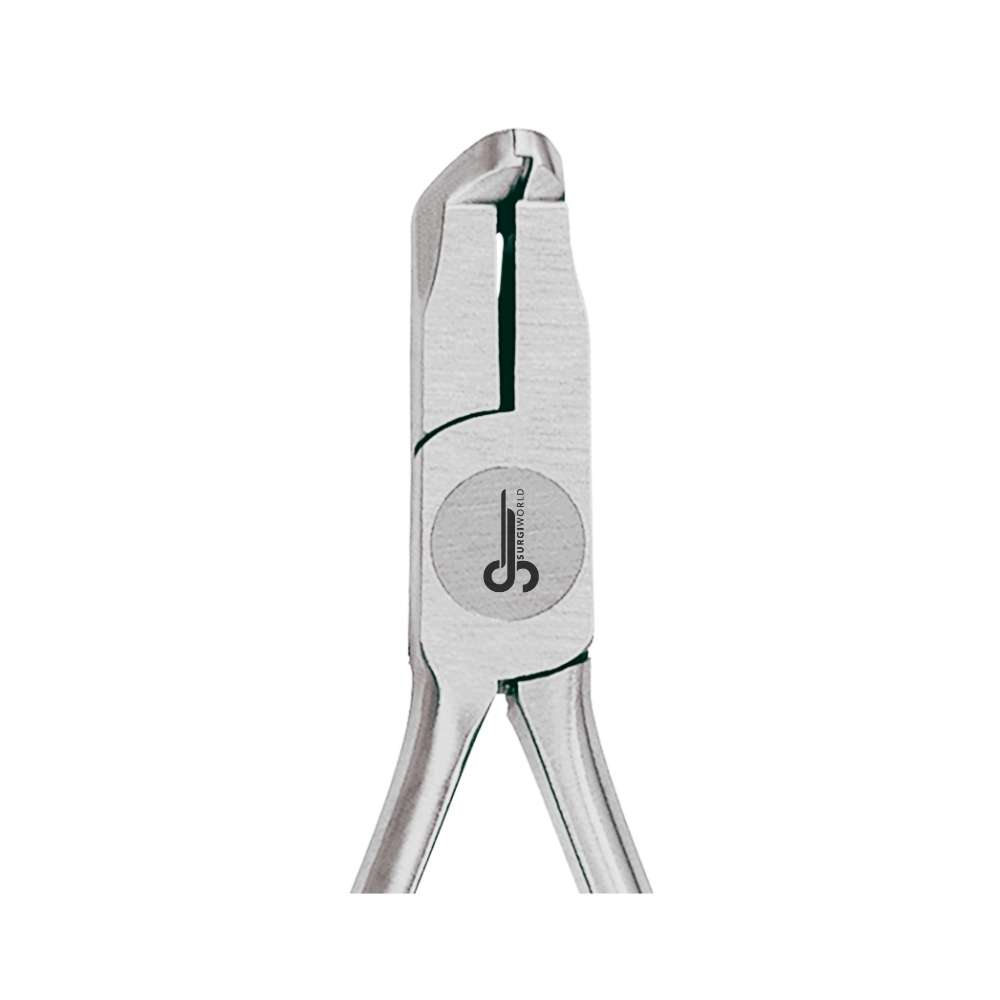
The critical difference between the standard and long-handle distal end cutter is reach. Cutting wire flush distal to a second molar buccal tube requires placing the cutter tip in a region where the buccal mucosa, the cheek retractor, and the posterior limit of the oral opening all compete for space. With a standard-length handle, the operator’s fingers are relatively close to the patient’s lip line, which constrains wrist rotation and makes visual confirmation that the cut is positioned exactly distal to the tube – not across it – more difficult.
The extended handle of the Long version moves the operator’s grip back along the instrument, increasing the distance between the working tip and the finger position. This gives the clinician more rotational freedom to angle the working end accurately against the buccal tube, reduces the visual obstruction caused by the operator’s own hand, and decreases the likelihood of the instrument contacting adjacent soft tissue during positioning. In patients with limited mouth opening – such as those with TMJ pathology, post-surgical restriction, or gag reflex sensitivity – the extended handle may allow the operator to maintain a standard finger fulcrum position on the cheek or teeth rather than inserting the hand further intraorally.
All clinical functions are identical to the standard Universal Cut and Hold Distal End Cutter. The cut-and-hold mechanism retains the cut wire segment after severing, preventing the trimmed piece from falling free in the patient’s mouth. Wire capacity covers .012″ (.30 mm) through .021″ × .025″ (.53 mm × .64 mm), encompassing the full spectrum of round and rectangular archwires used in fixed appliance treatment from initial levelling to finishing. The smooth tapered tip cuts flush distal to the buccal tube without risk of crimping the tube entrance. Approximately 5.1″ in length, medical-grade stainless steel, autoclavable.




Reviews
There are no reviews yet.